








A new independent analysis of how the United Nations should deal with the wide-ranging challenges plaguing Afghanistan is likely to be debated privately in the Security Council on Nov. 28. Although the Taliban are unequivocal in their contempt for human rights standards, particularly gender equality, they want a seat at the UN. They also want UN sanctions to be lifted and foreign exchange reserves unfrozen.
What is standing in their way? The Taliban’s harsh treatment of women and girls.
The assessment, led by Feridun Sinirlioglu, a former Turkish ambassador to the UN, lays out conditions for engagement by the world body — including the Security Council — with the Taliban. Isolating the regime is not an option in the recommendations. The country is mired in a profound humanitarian crisis, the largest and most complex in the world, ever since the Taliban took over in August 2021, and humanitarian organizations are committed to providing aid.
Beyond this continuing catastrophe, neighboring countries also want to engage with the Taliban on matters of counterterrorism, counternarcotics and mining and trade. The hope for such participation with the Taliban is that it will help the de facto authorities move past their misogynist authoritarianism.
Afghanistan is home to the world’s worst women’s rights crisis. The goal of most of the Taliban’s edicts — 54 out of 80 overall — is to strip women and girls of their basic civil and political rights. The Sinirlioglu report notes this (in a footnote) but skimps on details of the comprehensive nature of the edicts and their violent consequences.
The assessment begins with a jarring effort to look on the bright side, mentioning a single decree related to women and girls from December 2021, banning forced marriage and protecting a widow’s right to inheritance. The analysis acknowledges that this decree is poorly enforced. Of the other Taliban edicts, the focus is on the well-known banning of adolescent and teenage girls from schools and women from most workplaces. The report does not mention that women cannot sit on boards of enterprises nor sign checks for any nonprofit organization they have founded. They cannot venture beyond their doorsteps without a male chaperone.
No mention is also made of increasing child marriages and overall violence against women. Nor is the mental health crisis among women and girls, with rising suicide rates, featured. Welfare programs that might have mitigated the abysmal conditions that women and girls face have been closed, as have shelters for female victims of domestic violence. The Ministry of Women’s Affairs has been replaced with the Ministry for the Propagation of Virtue and the Prevention of Vice, a heavy-handed signal that inequality in gender relations is divinely ordained and desirable and not humanly constructed, destructive and reformable.
The Sinirlioglu report ignores the intense global debate about whether the Taliban’s cancellation of women’s rights constitutes “gender apartheid.” This term refers to the Taliban’s structural misogyny, which makes the subjugation of women a core function and purpose of state. Just as with racial apartheid, this oppression involves spatial segregation: half the population cannot be fully visible in public.
The report’s “roadmap” calls for the Taliban to meet Afghanistan’s obligations under international human rights treaties. Expectations that the Taliban will comply seem unrealistic, given their intractability on gender equality. Yet a clause in the report says the Taliban can take “good faith measures” to show such efforts. There is no demand for a reversal of misogynist edicts. This could give the Taliban opportunities to substitute symbolic “good faith” gestures for serious action, such as setting up controlled spaces for a limited amount of girls’ schooling or women’s work without allowing women to have a political voice or financial independence.
The Taliban know they can resist global pressure on human rights, especially that of women. Notwithstanding the UN’s official commitment to gender equality, neither it nor most individual countries, nor even those professing to follow a “feminist foreign policy” will likely let women’s rights interfere with even limited engagement with the Taliban.
The Sinirlioglu report does itself no favors by evading a frank account of the gender apartheid being practiced in Afghanistan. Given that the UN General Assembly suspended South Africa (in 1974) because of global revulsion with its policy of racial apartheid, why would the Assembly award membership to a regime that practices gender apartheid?


Women’s rights are no small matter, but the underreporting in this assessment on the Taliban’s misogyny is a sign that such rights are perceived as an inconvenience on the road to engaging with the Taliban.
The report ends with suggestions on how the international community can interact with the Taliban, such as pursuing dialogue through existing national envoys on Afghanistan; creating a small international contact group; and appointing a UN special envoy for Afghanistan. In response to these recommendations, a nongovernmental group that provides online education to Afghan girls, called Girls on the Path to Change, are demanding that the contact group and the envoy must be people with a “strong background” on human rights, especially women’s rights, “and should not have any previous ties and relations with Afghanistan or any group in Afghanistan.”
If such approaches are pursued, participating countries must pledge that all their representatives to such forums be women, and the UN special envoy should be a woman. If the international community cannot enforce the norms of women’s rights, then it should demonstrate that it will not dilute its own standards when engaging with the Taliban.
A pattern of some countries sending all-male delegations signals compliance with — even appeasement of — the Taliban. The Taliban have portrayed themselves as agents of decolonization, encouraging observers to suspend judgment of their extreme patriarchy out of misplaced cultural relativism. If aid donors, the Security Council and the UN Secretariat do not consistently object to the Taliban’s treatment of women, they will never change.
The essay was updated to reflect the new date when the Security Council will discuss the assessment report on Afghanistan.


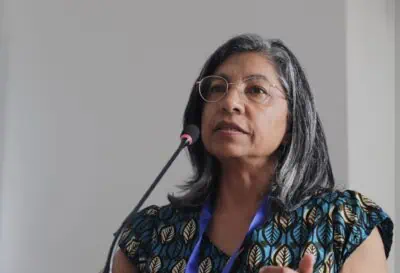






Anne Marie Goetz’s excellent article illuminates the dismal status of women’s human rights not only in Afghanistan, but also around the world. Yes, indeed, even the backward Taliban know they can resist global pressure for the call for human rights for women. The Taliban’s raw misogyny represents the worst on a scale of not really believing that women are equal to men and deserving of full human rights. On the other end of the scale, advanced Scandinavian countries still do not allow women the full panoply of human rights. I suggest that if women are to be considered equal to men (not counting physical strength and aggression) thinking people must look beyond the good intentions of treaties and international standards and resort to measures, such as the country-wide strike by the women of Iceland. While such measures may provoke violence–as it did against the suffragettes in the earlier days of the U.S.–waiting for men to come to their senses becomes intolerable. Not surprisingly, today, we see violence in countries like Iran against protesting women for their efforts to merely dress the way they wish. Bold, smart actions are needed.
I advise this link:https://www.un.org/en/about-us/about-un-membership#:~:text=Membership%20in%20the%20Organization%2C%20in,to%20carry%20out%20these%20obligations%E2%80%9D for a good understanding of how any country can proceed to request joining the UN. However, the UN Security Council must make a recommendation and then the 193 UN General Assembly would vote. The Taliban must meet the UN Charter and efforts for ” peace-keeping”; however, this would prove troublesome. Additionally, their known actions of misogyny and maltreatment of women and girls would also not be in keeping with the UN. There are other ways to conduct meetings if if if the Taliban were actually serious and intend to make changes and not just speak words.
Afghanistan is already a member of the UN. The question is whether the Taliban can take the seat.