It was exactly 12 years ago when Malala Yousafzai, now 27, was shot in the head by the Pakistan branch of the Taliban while riding home from school in a bus. On the same day — Oct. 9 — more than a decade later, the world-renowned rights advocate said that women in Afghanistan still have guns to their heads.
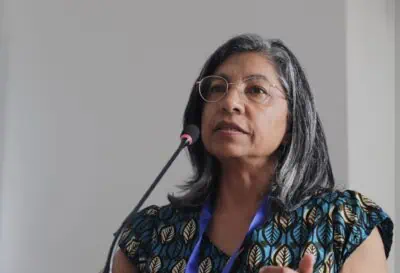
Yousafzai, a Nobel Peace Prize laureate, read an acceptance speech after she was awarded the 2024 Champion of the International Rule of Law, held at the New York City Bar Association in midtown Manhattan on Oct. 9.
The Taliban in Afghanistan have issued several dozen decrees restricting the rights of women since it regained power in August 2021. Girls are not allowed education beyond sixth grade while women, with exceptions, are not allowed to work, to be seen in public without a male chaperone or even to seek medical care without the supervision of a male family member. Malala said these restrictions are not just discrimination but a form of “gender apartheid.”
In September, the Oscar-winning actress Meryl Streep said that in Kabul, the female cat has more freedom than a woman, describing the situation of Afghan women during a speech she gave on the sidelines of the opening session of the 79th United Nations General Assembly meeting last month.
In September as well, Richard Bennett, the UN special rapporteur on human rights in Afghanistan released a statement on the continuing violations by the Taliban of rights in the country, including the so-called morality laws.
Just weeks later, Malala called for the inclusion of Afghan women in peace negotiations and decision-making processes, as many other activists have been demanding for several years and that Security Council Resolution 1325, known as women, peace and security, mandates. She acknowledged the continuing work of women-led and other organizations in Afghanistan that are finding creative ways to educate girls, even as most formal schools remain closed. She called for increased funding for these organizations to ensure girls’ education continues despite the challenges.
PassBlue caught up with Malala right after the International Rule of Law 2024 gala on Oct. 9. The conversation has been edited and condensed for clarity and brevity.
PasBlue: In your acceptance speech earlier this evening, you said that Afghan women have “a gun to their heads right now.” Could you elaborate?
Malala Yousafzai: What’s happening to women and girls in Afghanistan isn’t new. When the Taliban took control in 1996, they imposed similar restrictions — banning education and work for women. In 2021, after Kabul fell to the Taliban again, they gradually reinstated those same laws, barring women from public life, education and work. The Taliban are literally and metaphorically pointing guns at women. They’ve issued decrees limiting women’s rights, essentially trapping them in their homes. This is systematic oppression, not just discrimination. That’s why Afghan women activists are campaigning to codify gender apartheid into international law, so the Taliban can be held accountable for their crimes.
PassBlue: What’s your main message tonight?
Malala: We need to stand in solidarity with Afghan women, which means more than just words — it’s about action. Afghan women have been leading the fight for their rights, especially since the Taliban’s return. They must be included in all negotiations, as their voices are crucial. Any engagement with the Taliban should be principled, and the inclusion of women is non-negotiable. We must also demand that world leaders hold the Taliban accountable, not normalize relations with them while they commit such violations.
PassBlue: There’s been much discussion about the role of the United States and the international community in Afghanistan’s current situation. What are your thoughts?
Malala: Many countries compromised on women’s rights when they negotiated with the Taliban. Afghanistan is now the only country where girls above Grade six are banned from education. These countries must reflect on their decisions and recognize the damage they’ve done. I urge them not to walk away but to engage with Afghan women and help restore their rights and dignity.
PassBlue: You’re in touch with Afghan women and girls. What are you hearing from them?
Malala: Afghan women-led organizations are finding ways to keep girls educated through digital platforms and secret schools. These are temporary solutions, but they’re vital. We need more funding for these groups, and we must continue advocating for girls to return to school. Afghan women activists are also leading a global campaign to recognize gender apartheid as a crime against humanity.
PassBlue: Do you think the UN — both the Secretariat and the Security Council — are doing enough for Afghan women?
Malala: The UN has made commitments to education, but more must be done. Afghan women need to be part of all discussions with the Taliban. The exclusion of women in the Doha talks was a disappointment, and since then, the Taliban have imposed even harsher restrictions. The UN should not compromise on the rights of women and girls and must hold the Taliban accountable.