








This week, PassBlue produced an informal survey asking our readers to submit what they considered the most important question they would ask the current UN secretary-general candidates if they had a chance to do so. The anonymous responses, submitted through our emailed survey, held July 19-21, revealed a portrait of an institution under strain and a public demanding that the organization prove its worth.
Altogether, the respondents’ questions – totaling approximately 225 submissions – read less like a survey and more like a diagnosis. Beneath the variety of phrasing, a handful of anxieties recur: That powerful countries ignore the UN Charter when it suits them, that the Security Council is structurally incapable of doing its job, that peace itself feels further away and that the UN’s own house needs to be more accountable.
Below are the 10 most-common themes to emerge from the survey, ranked by how often they appeared, along with two representative questions from each — quoted as submitted — to give a sense of the range and tone within each concern. PassBlue did not edit the responses.
1. Standing Up to the Powerful (13% )
The single-largest cluster of questions was not about policy but about spine. Submitters wanted to know whether the next UN secretary-general will defer to the countries that hold the most power — chiefly the P5 (Britain, China, France, Russia and the US) — or whether they will act independently when their interests conflict with the UN Charter. The frequent, pointed references to the US and to figures like Presidents Donald Trump and Vladimir Putin, respectively, suggest this concern is influenced by the current geopolitics.
“Will you stand up to the US if need be?”
“What specific reforms will you pursue during your first term to make the United Nations more trusted, accountable, and representative of all humanity rather than the interests of the most powerful states?”
2. Security Council Reform and the Veto (12%)
Close behind is the structural version of the same question: The veto power held by the P5. Many respondents see this as the root mechanical flaw that produces deadlock on everything from war crimes to humanitarian access in the Security Council. The questions ranged from technical (“what actions and scenarios” could replace the veto) to demands to abolish it.
“Do you have the courage to undertake a reform of the Security Council which is blocked by the P5?”
“Will you support ending the permanent member status, with its permanent veto on progress and justice?”
3. Peacemaking, Mediation and Conflict Prevention (10%)
A broad, passionate set of questions pressed candidates on the UN’s core mission: Preventing war. These questions often invoked the language of the Charter itself — “saving succeeding generations from the scourge of war” — and asked how a UN secretary-general with famously limited formal power can still be a credible mediator in an era of fragmented, overlapping conflicts.
“How would you propose that the UN achieve its objective of saving succeeding generations from the scourge of war?”
“How do you intend to activate the role of the secretary general as an international mediator and peace maker in this era of global international disorder?”
4. Financing and Member-State Dues (6%)
The UN’s money problems surface as their own distinct theme. Questions focused on the practical mechanics of a cash-strapped organization: Member states withholding dues, an over-reliance on a small number of major donors and what levers — if any — a secretary-general has to enforce financial discipline among sovereign states.
“The United Nations is being disrupted and downgraded by the member states which do not pay their obligatory financial dues on time and in full. What levers can the SG use to remedy this refusal to implement the UN Charter?”
“What will be your strategy to ensure the financial sustainability of the Organization? What are your plans to prevent the UN from being held hostage by its two largest budget contributors?”
5. UN Relevance and Reputation (6% )
Tied with financing is a deeper worry: Does anyone still take the UN seriously? Several questions described the organization in stark terms — a “toothless tiger,” an institution facing “near collapse” — and asked what a new secretary-general can concretely do to reverse a perceived decline in global standing and public interest.
“Why do you think the UN is getting the reputation as a toothless tiger?”
“How will you ensure the UN stays relevant in a world where dictators rule even in western nations, usually trying to stymie the UN’s power and work?”
6. Gender Equality and Women’s Rights (5%)
A substantial, consistent cluster addressed gender, asked largely around a global backlash against women’s rights. Respondents asked what the candidate will do to defend hard-won gains on women’s rights and representation — several explicitly reference the possibility, after eight decades of male secretaries-general, of the role finally going to a woman.


“How would you solve the epidemic of violence against women and girls worldwide? Previous SGs obviously failed — so what would you do differently?”
“There is a clear movement to nominate a woman as Secretary-General. What do you perceive will be women’s agency?”
7. Leadership Style, Vision and Legacy (5%)
These questions probed character and self-conception — what kind of leader the candidate intends to be and what they hope history will say about their tenure. A few are playful (the hypothetical elevator stuck with three world leaders), but most are sincere attempts to understand a candidate’s personal compass before the job – and even the candidacy – forces trade-offs on them.
“If you become Secretary-General, what will define your legacy?”
“What is the one decision you would make in your first 100 days as Secretary-General that would most improve the organization’s ability to fulfill its mission, and how would you measure whether it succeeded?”
8. Restoring Public and Member-State Trust (5% )
A close cousin of the “relevance” theme, this cluster is more about the erosion of confidence — among both ordinary people and member states — that the UN can be relied on in a crisis. The recurring ask is for concrete, near-term action rather than rhetoric.
“How are you going to restore credibility to the UN system?”
“What would you do as Secretary-General to restore Member States’ confidence so that, when confronted with a major crisis, they see the United Nations not as a last resort, but as their first choice?”
9. Hiring Practices, Nepotism and Meritocracy (5%)
A notably specific, pointed cluster targets the UN’s own internal personnel practices — nepotism, “geographic distribution” hiring seen as a substitute for merit and a lack of accountability among senior officials. These questions suggest a legacy of insider frustration.
“Do you plan to stop hiring staff according to member states’ political support/connections and the so-called ‘geographic distribution’ at the expense of qualifications, competence and motivation, including at the highest levels?”
“How will you ensure UN reforms tackle corruption and nepotism at their roots? Too often, merit loses to patronage and staff cliques. What will you do to make integrity, performance and accountability the basis for career progression?”
10. The Secretary-General’s Independence and Charter Authority (4% of questions)
Rounding out the top 10 is a more legalistic, almost constitutional set of questions about the office itself — how much independent authority the secretary-general actually has under the Charter (Article 100 comes up specifically), and whether the role should be read as a neutral facilitator or an independent political player willing to act even when major powers disagree with her/his decisions.
“How do you interpret your obligation under Article 100 of the UN Charter to act independently of Member States, and what concrete steps would you take to preserve that independence throughout your term?”
“Do you see the Secretary-General primarily as a facilitator of cooperation among Member States, or as an independent political actor who should actively shape diplomacy and drive initiatives even when major powers are divided?”
Summary
Taken together, the 10 themes describe a global organization that the public still wants to believe in, but no longer trusts to act for the public good. Power and its abuses (themes 1, 2, and 10) dominate the list, suggesting the most urgent public demand is structural: Fix the imbalance before anything else can be improved. Close behind is a demand that the UN must do its job: Deliver peace, pay its bills and clean up its own house before it can credibly ask the world to trust it again.
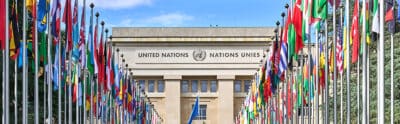







Conclusion: A Shared Responsibility for the Future of the United Nations
The survey reflects a global community that has not lost faith in the United Nations, but is asking urgent and difficult questions about its future. Respondents are seeking a Secretary-General with the courage to uphold the UN Charter, the independence to speak truth to power, and the vision to restore confidence in multilateralism. They want an Organization that is more effective in preventing conflict, more accountable in its operations, and more sustainable in its financing.
At the same time, these findings remind us of an essential reality: the future and viability of the United Nations cannot rest on the shoulders of the Secretary-General alone. While the Secretary-General provides leadership, moral authority, strategic vision, and the diplomatic role of good offices, the effectiveness of the Organization ultimately depends on the collective political will of its Member States.
A strong and visionary Secretary-General remains indispensable—not because one individual can resolve all the challenges confronting the United Nations, but because effective leadership can inspire collective action. The Secretary-General must be a principled convener, a courageous defender of the Charter, and a bridge-builder capable of bringing Member States together in pursuit of common solutions. Visionary leadership does not replace the responsibility of Member States; rather, it helps mobilize that responsibility and transform shared aspirations into meaningful action.
The Security Council must fulfill its primary responsibility for maintaining international peace and security with greater unity, purpose, and commitment to the principles of the Charter. The General Assembly, as the most representative body of the United Nations, must continue to serve as a forum for inclusive dialogue, cooperation, and the advancement of shared global norms. The responsibility for a stronger United Nations belongs to all Member States—not only those with the greatest power or influence.
Calls for Security Council reform, greater accountability, and institutional renewal are both legitimate and necessary. However, sustainable reform requires more than structural adjustments. It requires political courage, responsible leadership, and a renewed willingness by Member States to place the collective interests of humanity alongside their national priorities. National interests will always be part of international relations, but they should not overshadow the shared responsibilities that unite the global community.
Beyond governments and institutions, every individual connected directly or indirectly to the United Nations also has a responsibility to protect and strengthen this important global entity. UN personnel, civil society, partners, advocates, scholars, and citizens who believe in the values of the Charter all contribute to the credibility and legitimacy of the Organization. The United Nations is not sustained by governments alone; it is sustained by the commitment, integrity, and actions of people who uphold its ideals every day.
Ultimately, the relevance of the United Nations will not be measured solely by the leadership of its next Secretary-General, but by whether the international community chooses cooperation over confrontation, dialogue over division, and collective action over narrow interests. The Charter remains as relevant today as it was in 1945. The challenge before us is not simply to ask what the United Nations can do for the world, but what each of us can do to ensure that this indispensable institution continues to serve present and future generations.
Great summary and analysis. Now Trump is asking Infantino of the FIFA to become the UN next Secretary General contradicting this survey results! The world is going in the wrong direction!
Good analysis