This Week @UN: Quizzing SecGen candidates (again); progressives like feminist foreign policies; US damages HIV/AIDS progress; human rights chief wins another term.
Plus: Ebola spreads in Congo; global suffering from US-Iran war; attacks in Central African Republic; Houthis’ warmongering; ICC’s chief prosecutor booted.
Did someone forward this email to you? Subscribe now!
Follow us on LinkedIn, Blue Sky, Twitter (X), Facebook & Instagram
Our #1 story: Last week’s summary, featuring an item on the EU’s own Board of Peace: [UN: July 17] EU’s Own Board of Peace, Diplomats Defend the ICC & Lots More, by Dulcie Leimbach
PassBlue this week:
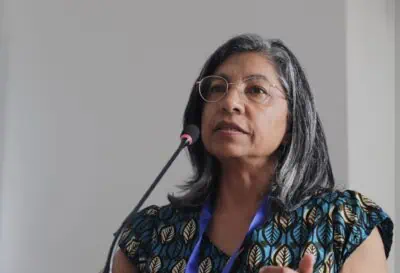
• Feminist Foreign Policies Boosted by Global Progressives, op-ed by Spogmay Ahmed
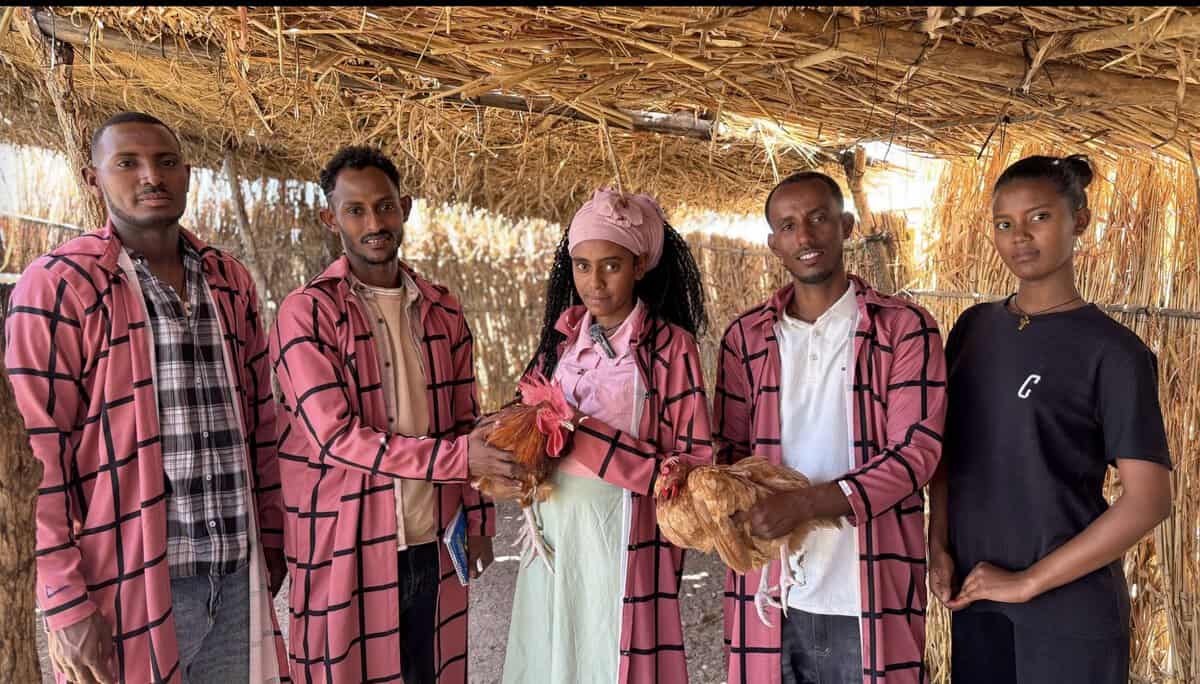
• The Tools to Ending HIV/AIDS Are Here, but US Cuts Damage Progress, by Anton Ferreira, reporting from South Africa
• The Most Important Question for UN Secretary-General Candidates: Our Survey Results, by PassBlue
• Can the Next UN Chief Fix a Broken Security Council and an Empty Bank Account?, by Damilola Banjo
• Stealth move: The four-year term of the UN High Commissioner for Human Rights Volker Turk was renewed in a feverish vote in the General Assembly on Friday, July 24, just as many people were eager for a summer dash toward the weekend. Yet, that seemed the point as the heated decision to take the step was blasted by Jeff Bartos, a US envoy to the UN, who asked for a one-week delay in the vote, calling the consideration to renew Turk’s term a rushed “backroom deal” orchestrated by UN Secretary-General António Guterres. (The GA vote to delay the decision didn’t move the needle for the US.) Threatening financial and other “consequences” if member states renewed Turk’s term (no high commissioner for human rights has ever served two full terms), 144 countries nevertheless voted to keep him on:

Relatedly, the UN spokesperson, Stéphane Dujarric, was asked at his media briefing on July 23 whether Guterres was trying to “push through a second term” for Turk (an Austrian) “without consideration of any outside consultations or candidates.” Dujarric’s reply: The [General Assembly] resolution that creates the post of high commissioner for human rights “says that that person is appointed for four years with a mandate that can be renewed for a further four years.”
He added that “consultations” have been held with member states on a renewal for Turk; “there is now a process that will go underway in the General Assembly”; and “I can tell you everything is being done above board and in a very transparent manner and in accordance with established rules and regulations.” Kenneth Roth, the former head of Human Rights Watch and now affiliated with Princeton University, scoffed at Guterres’s plan, saying “Turk has been a disaster.”
Separately, Turk and his office have just vacated Palais Wilson in Geneva for digs in the UN campus nearby, while another UN agency has moved into the Wilson building, reportedly to save money. The Refugee Agency, hit by steep US funding cuts under the Trump administration, has a closeup view of Lake Geneva, so no complaints on that front. (Our exclusive photo essay on the move by Turk and company.)
• Karim Khan booted as prosecutor of the ICC: In other big news at the UN on Friday, July 24, the Assembly of States Parties of the International Criminal Court voted secretly to remove the prosecutor, with 82 yes votes, 13 against, 15 abstentions, responding to charges of sexual misconduct. Reed Brody, a former war crimes prosecutor and a commissioner of the International Commission of Jurists, said: “This was the necessary decision. The Court is fighting for its survival against unprecedented U.S. sanctions and political attacks. It cannot wage that fight under the leadership of a prosecutor credibly found to have engaged in grave sexual misconduct toward a member of his own staff.”
Brody added that Khan portrayed the case against him as “retaliation for the arrest warrants against Israeli leaders. But two things can be true at once: the United States and Israel are indeed seeking to cripple the Court, and the prosecutor engaged in conduct that disqualifies him from leading it.”
Moreover, “Benjamin Netanyahu seized on this affair to portray the Court itself as tainted. Today’s decision removes that argument from his hands. The arrest warrants against Vladimir Putin, Benjamin Netanyahu, and Yoav Gallant belong to the Court, not to Karim Khan. They remain in force. The evidence remains. The Court’s work continues.”
Top UN news:
Monday, July 20
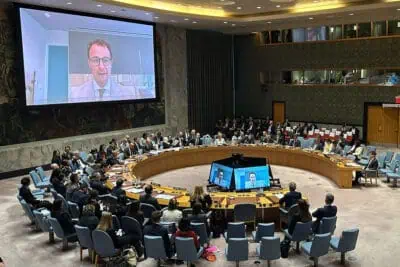
• Spokesperson’s briefing: The Office for the Coordination of Humanitarian Affairs (OCHA) staff are “concerned” about rising Ebola cases in at least 16 displacement sites across Ituri province in eastern Democratic Republic of the Congo that, hosting 270,000 people, are “overcrowded, and [have] limited access to basic services, which obviously increases the risk of disease transmission,” as “needs continue to outpace the resources” to support prevention and awareness activities for displaced communities.
Updates: OCHA and partners are helping the governments in Burundi and Rwanda on Ebola preparedness. While no Ebola cases have been confirmed in either country, both are at risk because of their proximity to affected areas in Congo and the movement of people across the borders. As of July 20, Congolese health authorities had reported 2,473 confirmed Ebola cases in five provinces (Ituri, North and South Kivus, Haut-Uele and Tshopo). Ituri remains the epicenter of the outbreak, accounting for nearly 90 percent of all confirmed cases. The outbreak’s expansion into two new provinces, Haut-Uele and Tshopo, “show the importance of managing the mobility dimensions of public health risks,” per the UN, adding that strengthening surveillance at points of entry and communities along the Congo River are key to preventing further spread. Meanwhile, violence is still hindering humanitarian work in eastern North Kivu province, where at least 30 people were killed and dozens injured in attacks in Beni on July 13-19.
• Senegal embraces Macky Sall: The UN secretary-general candidate and former president of Senegal had the endorsement of Burundi when he first declared his nomination for the UN’s top job. This week, that endorsement now includes Senegal.


• The US was the sole vote against a UN General Assembly resolution renewing global road safety, provoking some disbelief on X. Dan Negrea, the US envoy who read his country’s explanation of vote, called the text an example of “mandate creep.” (The US mission to the UN has not posted his remarks.)

Tuesday, July 21
• Spokesperson’s briefing: Guterres “remains deeply concerned” by the latest US–Iran war escalation, which has already affected neighboring countries, including the Gulf states, as well as pressured trade systems, humanitarian access and global costs for commodities and transport. Guterres also noted that recent attacks on nuclear and desalination plants in Iran, Kuwait and elsewhere “must stop immediately.” Asked whether the UN boss would be “personally involved” in attempts to restore diplomacy in the US-Iran conflict, Dujarric said Guterres’s message, “publicly and privately,” remains that he does not “want to see a return to a full-scale conflict,” and “it is incumbent on the Secretary-General and all parties to do whatever they can to push for a return to diplomacy.”

Wednesday, July 22
• Spokesperson’s briefing: The UN peacekeeping mission in the Central African Republic (MINUSCA) said the “security situation remains calm, although still fragile” in the city of Am-Dafock, Vakaga Prefecture, three weeks after attacks killed military and security forces as well as civilians in an area bordering Sudan. MINUSCA has reinforced the presence of peacekeepers and continues its efforts, Dujarric said, notably facilitating humanitarian help to nearly 18,000 people who have sought refuge near the UN base in Am-Dafock. MINUSCA said the attacks were carred out by “armed elements affiliated” with the Front populaire pour la renaissance de la Centrafrique (FPRC), the Mouvement démocratique pour le rassemblement du peuple centrafricain (MDRPC) and “other unidentified armed elements.” Gunfire had also targeted MINUSCA’s Temporary Operating Base. Three Zambian peacekeepers were injured.
Thursday, July 23
• Spokesperson’s briefing: In the Mideast, the humanitarian effects of the latest escalation, including threats to maritime navigation and attacks on commercial vessels by the Houthis from Yemen, near the Bab al Mandab Strait in the Red Sea, and the Strait of Hormuz, are growing. The escalations could “further disrupt maritime trade, flights, border crossings and regional supply chains on which millions of people rely on,” Dujarric said. On July 24, Guterres urged the Houthis “to refrain from any further attacks or other escalatory actions, in line with Security Council resolution 2722 (2024) and subsequent relevant resolutions concerning attacks against commercial vessels and freedom of navigation in the Red Sea.” Hans Grundberg, the UN special envoy for Yemen, said, “I am alarmed by the resumption of attacks by Ansar Allah on commercial shipping and the renewed disruption of maritime navigation in the Red Sea” and urged the relevant parties to “change course and move towards negotiations that address Yemen’s political, economic and security challenges and put the interests of its people at the centre.”
Friday, July 24
• Spokesperson’s briefing: The UN deputy special coordinator for the Middle East Process, Ramiz Alakbarov, said in a statement that July 24’s “violent incidents” in which four Palestinians and two Israelis were killed and several others were injured, southwest of Nablus, show the “urgent need to protect civilians” and de-escalate the situation in the West Bank. Alakbarov called on Israel and Palestinians to immediately curb violence and urged the former to “prevent settler violence,” protect civilians and ensure accountability, adding that Palestinians must also “unequivocally reject violence.”
ICYMI:
Ecuador: Prosecutor Investigating US Boat Strikes and Claims of Torture Was Murdered in Ecuador, news article
US: Donald Trump’s Board of Peace to Set Up Gaza ‘Pilot’ City, news article
US: UN Ambassadors Mike Waltz, Jeff Bartos Testify Before US House Committee, video
Cuba: US Sends First Humanitarian Flight to Cuba Under New Aid Package, news article
Women: Feminist Organizations Complain to Guterres Against Former Spanish Minister on Transgender Issues, news article
Women: Violence Against Mothers, UN report
Human rights: The UN Funding Crisis and Human Rights Work, NGO analysis
UN Security Council: Less Solid Things: Security Council Straw Polls, think tank essay