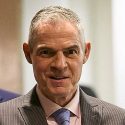





“The status quo is untenable, unsustainable, and genuinely, truly, inhumane,” the United Nations High Commissioner for Refugees Barham Salih said about the world’s refugees to the UN Security Council recently. To better manage their plight, he added, the Geneva-based UN Refugee Agency would “have to adapt and change.”
When Salih addresses his Executive Committee of 110 members on Oct. 12, in Geneva, he plans to elaborate on his statement of Sept. 254, highlighting, in the agency’s words, his efforts “to form a more agile, focused, efficient, and field-oriented organization, with clearer accountabilities, greater delegation of decision-making, better use of technology, data, and artificial intelligence.”
However successful these initiatives prove to be, it seems unlikely that they will be enough to ward off the potentially existential crisis confronting the agency, or UNHCR. Seventy-five years after the organization was founded, it faces an unprecedented weakness.
The primary cause of the agency’s current fragility is linked to current US government policies. For many years, the US was the organization’s largest donor and most reliable diplomatic ally. But that has changed dramatically since the second Trump administration took office in January 2025.
In recent months, the US has slashed its contributions to the UNHCR budget, which relies almost wholly on voluntary payments from a small group of countries in the West, plus Japan. While the US has traditionally provided 40 to 45 percent of the organization’s funding, that proportion is now about 20 percent.
In the last year, the Trump administration has also launched a campaign to dismantle the 1951 UN Refugee Convention, the legal instrument that provides the basis for UNHCR’s mandate and activities.
By closing its southern border with Mexico, the US has challenged a key principle that UNHCR seeks to uphold: Everyone has a right to seek asylum from persecution in other states.
The Trump administration has also undermined the principle of responsibility-sharing by abolishing the US refugee resettlement program, by far the largest in the world, and replacing it with an overtly racist scheme that will admit thousands of white South Africans to the US, even though they fail to meet the criteria for refugee status.
The US disdain for the work of UNHCR has been further clarified by the reorganization of the State Department, run by Secretary of State Marco Rubio. The Bureau for Population, Refugees and Migration, which previously channeled large amounts of funding to UNHCR and advocated for the organization in Washington, has been abolished and rebranded as the Office of Remigration.
Its remit is to deport foreign nationals who are deemed by the administration to be “illegal,” a category that includes many people who are of direct concern to UNHCR: refugees, asylum seekers and people with Temporary Protected Status, such as Haitians.
The US and UNHCR also disagree over the appointment of a new deputy UNHCR chief, a post traditionally occupied by a White House nominee. The administration had wanted Simon Hankinson, a member of the conservative Heritage Foundation and a strong supporter of US withdrawal from the global refugee system, to take the position.
Barham Salih, however, instead appointed Tressa Rae Finerty as his deputy, with the blessing of UN Secretary-General António Guterres. Finerty is a career diplomat who previously led the US Mission to the UN in Geneva. A standoff has since ensued, with State Department officials told not to meet with Finerty, who was sent on “administrative leave” and obliged to work from home.

While UNHCR sources suggest that this spat may have been resolved, rumors continue to swirl in Washington, New York City and Geneva that the Trump administration is still intent on punishing UNHCR, and that the nuclear option of entirely defunding the organization is still possible. Questioned by the media about it, a State Department spokesperson said that “we work with and through UNHCR when doing so advances US foreign policy interests.”
Scraping for funding
Unfortunately for Salih, a Kurdish politician and former president of Iraq who took up the UNHCR position just nine months ago, the organization is contending with other funding problems.
Almost all the dozen countries that provide the bulk of UNHCR’s funding have cut their contributions in the last two years, saying they needed to divert humanitarian resources to defense and domestic expenditures. As a result, the UNHCR budget has been slashed by well over $1 billion, and by July this year, only 32 percent of the required funding for 2026 had been received.
As a result of these adverse funding trends, some 5,000 UNHCR employees have lost their jobs in the last two years, 140 of the organization’s offices have been closed and international travel has been severely curtailed. Staff morale has plummeted and will not be improved by an impending restructuring of UNHCR hmeadquarters (the latest in a long series of such initiatives) and its relocation to a much smaller, less conveniently located building in Geneva.
Unsurprisingly, Salih is struggling to gain the support of the organization’s rank-and-file personnel, a situation worsened by his reportedly aloof management style and unexpected decision to replace the rest of his senior management team.
UNHCR’s crisis is compounded by the increasingly competitive nature of the UN’s humanitarian system. On the one hand, Guterres’s UN80 reform initiative has mooted the possibility of a merger between UNHCR and the International Organization for Migration.
IOM has already made gains into operations and funding streams relating to refugees and displaced people, blurring the line between the two organizations. Under the agency’s American boss, Amy Pope, IOM has become involved in US third-country deportations by providing services to migrants who are sent to places in which they have no previous connection.
UNHCR is also contending with Tom Fletcher, the UN’s emergency relief chief and head of the Office for the Coordination of Humanitarian Affairs. Besides grabbing media headlines about humanitarian crises, Fletcher has established a closer working relationship with the Trump administration.
In addition to endorsing Trump’s controversial Board of Peace for post-war Gaza (where the UN Refugee agency does not operate), Fletcher reached an agreement with the State Department this year, giving his agency some control over how US humanitarian funding is allocated to the UN’s different aid agencies.
Expectations for Oct. 12
How can Salih reverse the declining fortunes of his agency? When he meets with his Executive Committee, he will, according to UNHCR, propose an initiative that manifests “his ambition of reducing by 50 per cent the number of refugees in long-term displacement and who remain dependent on humanitarian assistance by 2035.”
The target will be achieved primarily “by expanding opportunities for inclusion and self-reliance” in the low-income countries where most refugees are living.
The attraction of the “50/35 initiative” is plain to see. If successful, it would reduce the burden that countries in the global South feel that they bear by accommodating large refugee populations, often for years or even decades. It would also cut the number of refugees who feel obliged to move on from such countries of first asylum to seek better opportunities in the West, where they are increasingly unwelcome.
The 50/35 initiative promises to limit the need for the world’s richest countries to finance long-term relief programs in the global South, freeing up funding for domestic use. And it would reduce the operating demands of UNHCR, which is supporting a growing number of long-term and aid-dependent refugees.
But will the seemingly noble objectives of the initiative be attained? Details are scarce, and refugee-hosting states might resist it if they feel it will encourage and enable refugees to remain on their territory, rather than return to their own country.
Given that UNHCR has launched previous efforts to resolve the problem of protracted refugee situations, how will this new plan rely on lessons learned? Will the plan be more than an eye-catching slogan and become a coherent program?
The 75-year-old UNHCR has continuously expanded. That trajectory has now hit an abrupt end, leaving an organization wondering whether it can survive. What guidance will Salih hear from his Executive Committee, an unwieldy, divided group of 110 states, some of which are responsible for creating and sustaining the very refugee situations that UNHCR is expected to resolve?