







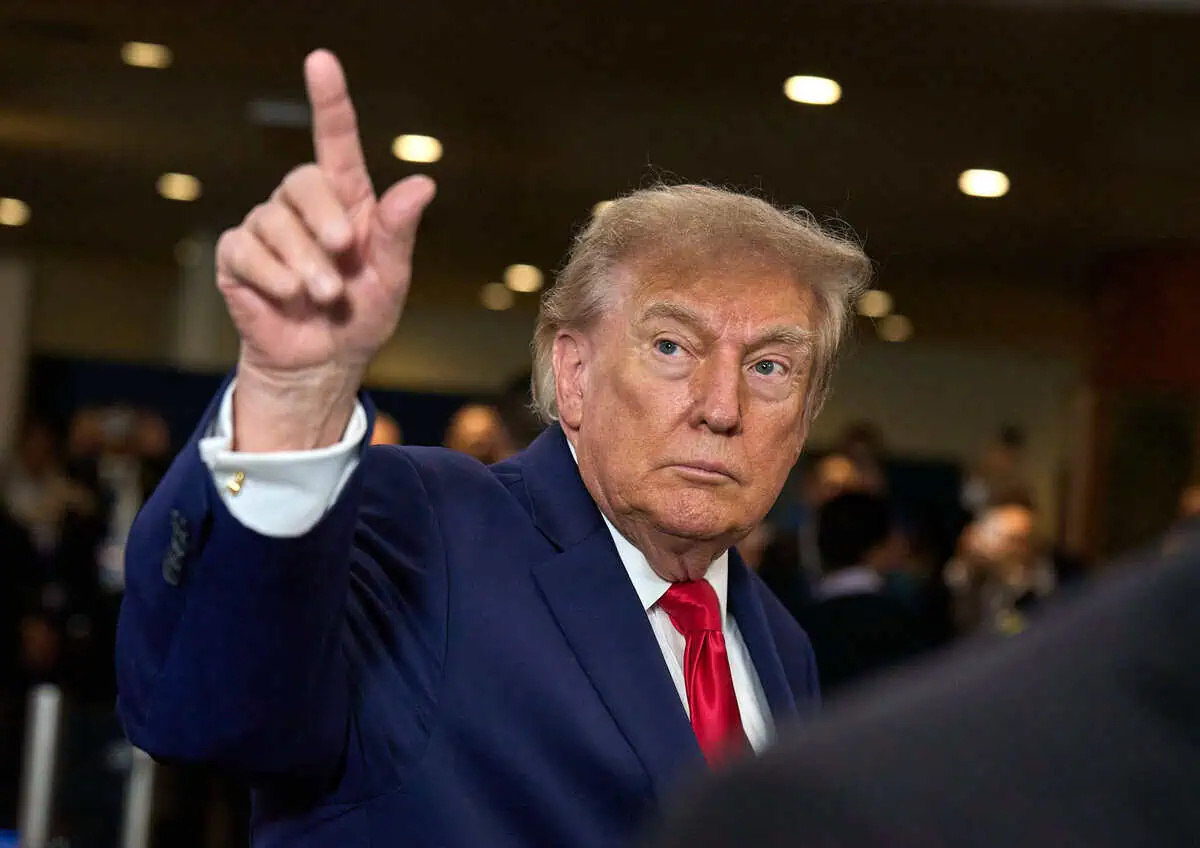
President Trump’s speech to the United Nations General Assembly today was as much a nod to the upcoming midterm Congressional elections, just six weeks away, as it was to any efforts to explain his bewildering if often self-destructive foreign policy to the world.
In his opening remarks, delivered on Sept. 22, Trump listed a series of accomplishments of the first two years of his second term, emphasizing that “America is back.” But his claims to having an economy which “is the envy of the world,” to have diminished poverty, to have enacted the largest tax cuts in history, to have brought in trillions in new investments, to have lowered crime rates and to have made the future “very, very bright,” are misleading if not false.
They have apparently have not persuaded the American public, two-thirds of whom, according to the latest polls, disapprove of his overall performance in office.
Trump’s pitch to the UN itself about his international policies suffered, too, from many of the same sins. First of all, he sought to defend his attack on Iran earlier this year but gave no explanation as to why he took this action to begin with. He said he wanted to stop Iran from developing a nuclear weapon. However, he failed to mention that it was his own decision to end President Obama’s deal with Tehran over the nuclear issue. That alone led to Iran’s release from an international treaty, known as the JCPOA, and renewed Tehran’s involvement with such weaponry.
Trump also asserted that his “Epic Fury” campaign, started on Feb. 28, had wiped out Iran’s military, but he did not address the fact that Iran still had the ability to strike back and severely damage US bases all around the Mideast. He talked up the idea that he might “annihilate” Iran — with its delegates in the Assembly listening — but this surely had to be an empty threat, as the war is the most unpopular item on this year’s midterm agenda.
Begging countries
In the end, Trump meekly made yet another promise to settle the conflict, this time after the elections. Knowing that the facts don’t add up to a successful deal, he then pleaded for UN member states to help him isolate Tehran, and he politely thanked the UN Security Council for passing a resolution condemning Iran’s attacks on commercial shipping.
His need for help from his fellow UN member states was also apparent when he went on, expressing his gratitude again to the Security Council for yet another one of its resolutions. Undoubtedly, this came as a shock to many countries, given his past blanket castigations of the organization. This time, he praised the Council for supporting his Gaza peace plan and his Board of Peace undertaking (while, by the way, taking credit for the release of all Israeli hostages).
All of this prevaricating led him to quote from letters sent to him by leaders of Pakistan, Azerbaijan, Rwanda and Cambodia, among others, who he said congratulated him for settling their border disputes, some eight in all, even while vowing, almost as an aside, that he would personally end the Ukrainian-Russian war soon — thereby beseeching his audience to believe that he is, indeed, a leader for peace and probably deserving of the Nobel Peace Prize.
From there, Trump returned to what he regards as the US’ own sphere of influence — this time to talk about how Washington will not allow any foreign nation a “foothold” in the Hemisphere. Here, Trump cited the long-discredited Monroe Doctrine (blithely renaming it the “Don Doctrine”) as the basis for future US actions in the region. Indeed, he said that he had rebuilt the US armed forces to handle future eventualities there.
He mentioned that he had already taken some major steps in the Americas — for example, ousting Nicolás Maduro from Venezuela and signing new oil agreements with the nation; cracking down on drug cartels that he compared to local ISIS gangs; working with Mexico to stop smuggling; and blockading Cuba, whose Communist regime, he hinted, had dealings with the Democratic Socialists of America (DSA) — obviously a pre-election shot at his empowered rival, the Democratic Party.
Lastly, he praised the Greenland deal with Denmark that he had just announced — even though most observers said he simply copied the same deal that President Truman made with that Scandinavian island back in the 1940s to allow US involvement in the territory.
Trump’s remaining remarks were devoted to criticizing globalism at the UN, as if that concept was something evil and notorious, when, after all, the body was originally founded solely to deal with international issues. He pointed out how he had gotten a 15 percent cut in the UN budget and forced the layoffs of some 4,000 UN employees, presumably all globalist bureaucrats he abhors.
In fact, the US reductions in aid to the UN have been far worse than just those figures he cited, especially if one includes the US closure of the USAID agency, which had helped fund the UN in the past, as well as the $4 billion or so the US still owes to the UN in back dues and peacekeeping arrears.
Criticism, of course
In addition, Trump lambasted a proposed global carbon tax, the International Criminal Court, the UN Human Rights Council for its purported backing of alleged transgender mutilation and Christian persecution, UNESCO for supporting mass migration, what he considered the unfounded fears of global climate change, globalists seeking to control AI (calling it “super intelligence”) and, somewhat puzzling, the hoary old Russian hoaxers who said that Moscow helped him win the 2016 election.
He failed to speak, though, to the issues of pandemics, racial justice, trade and tariffs, Taiwan, North Korea and China (though he is seeing President Xi Jinping tomorrow in Washington), Secretary-General António Guterres’s departure and the contest for the new secretary-general, among many other UN challenges.
While his performance overall today was slightly less confrontational than his past appearances at the UN, Trump still unloaded these last-minute volleys at the institution — if only to please his right-wing constituents in the various swing states that may decide the midterms. — Stephen Schlesinger
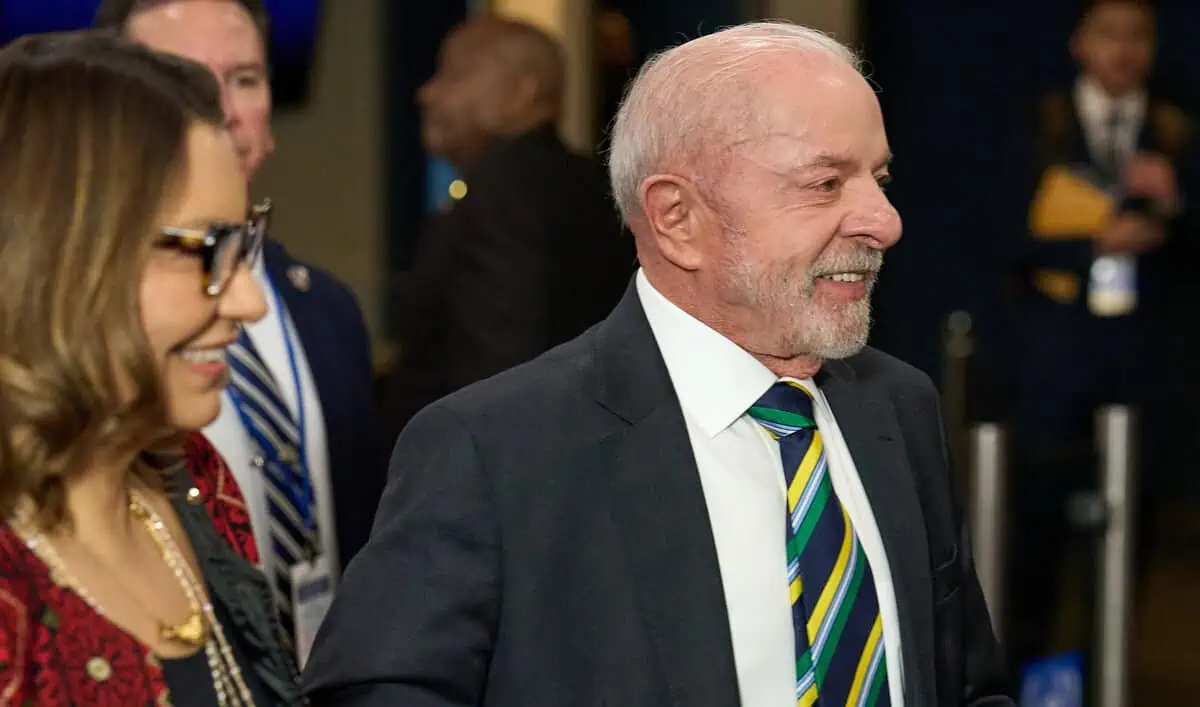
Brazil’s Lula Pushes Back Against US
As is customary, Brazil’s head of state was the first to address the UN General Assembly, marking President Luis Inácio Lula da Silva’s 10th time speaking to the plenary during the high-level week on Sept. 22.
In his remarks, Lula, who is up for re-election in early October, expressed concern about the UN’s failure to stop wars across the world and echoed calls for Security Council reform. He also stressed the importance of addressing climate change, positioned Brazil as a leader in tech and AI regulation and renewed his calls for multilateralism and international security cooperation that respects sovereignty and international law.
Throughout his speech, Lula also underscored Brazil’s sovereignty amid renewed US actions in the Americas, stating that “Brazil does not fit in anyone’s backyard.”
The relationship between Lula and President Trump has been tense in the lead-up to Brazil’s presidential election on Oct. 4 (with a possible runoff on Oct. 25). Lula is facing an increasingly tight race against Senator Flávio Bolsonaro, the son of former President Jair Bolsonaro. The Bolsonaro family, which has close ties with the Trump administration, has lobbied the US government in recent months to drop tariffs on Brazilian imports.
On July 15, the US announced a 25 percent tariff on certain Brazilian goods. The measure was swiftly followed by a separate 12.5 percent tariff against Brazil and other countries that allegedly failed to prohibit or enforce bans on products made with forced labor. So far, Brazil has held off imposing retaliatory tariffs while trade conversations continue. However, Trump and Lula are not set to meet this week while they are in New York City for the General Assembly opening session.
At the end of his remarks, Lula warned against foreign intervention in the country’s electoral process, in an apparent nod to the US, saying: “We will not allow the enemies of democracy, whether domestic or foreign, to undermine popular will. Brazilian democracy belongs to Brazilians.” — Lara Loaiza Arias
US Signs Deal With Greenland & Denmark
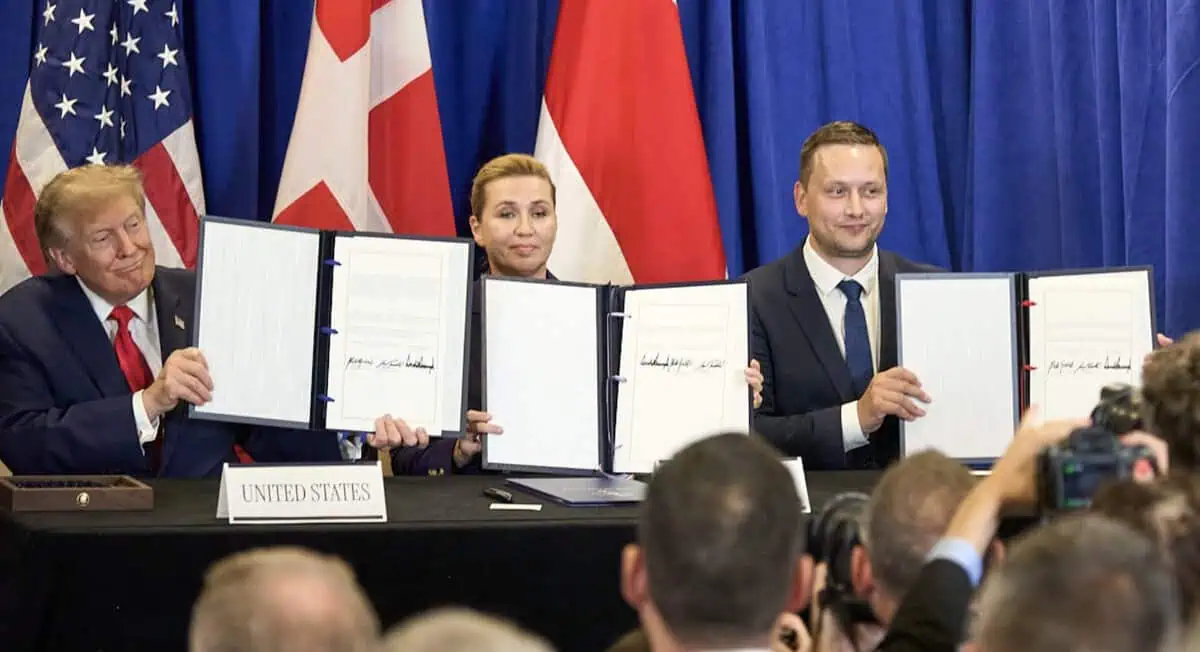
Frank Sinatra’s “My Way” was played before the start of the US-Denmark-Greenland signing ceremony over their recent security agreement, held in a UN conference room on Sept. 22, right after President Trump read his remarks to the world leaders in the General Assembly session in the morning.
Attending the ceremony were the signatories — Trump, Danish Prime Minister Mette Frederick and Greenland Prime Minister Jens-Frederik Nielsen — as well as others from the US, including Stephen Miller, Trump’s policy adviser; US Commerce Secretary Howard Lutnick; Secretary of State Marco Rubio, Chief of Staff Susie Wiles; and US ambassador to the UN Mike Waltz. The Danes and Greenlanders also came with extensive representation.
After the signing, the pool reporters in the room yelled questions to Trump, including whether ownership of Greenland was off the table, but he did not respond. He did say, however, “I love the people of Greenland.”
He added: “We’ll be working very hard and very much in conjunction with each other, and it’s just a real honor to be here. This was a long-in-the-making. You know, you can go back many, many decades, probably centuries. But, you go back way back in the line of presidents. And almost every president at least mentioned it, but most of them just mentioned it.
Some really wanted to make a deal and, never got it done. But we’re getting it done. This is tremendous for Europe and the United States, for everybody and for Greenland. It’s going to be incredible. And the people of Greenland have been so nice. The people of Denmark have been amazing. And so I know it’s going to be a long time, fantastic relationship.”
Frederiksen said: “Mr. President, ever since the Second World War, the United States has defended the free world, created its parity, progress, peace and freedom. And I am very proud to say that in the Kingdom of Denmark, the United States has been a friend and has always kept our word an ally we have always been able to rely on. And this day represents a milestone in our longstanding cooperation.”
Nielsen added: “Today is a very important day for our shared security. We are signing an agreement that brings the 1951 defense agreement into 2026. With this, we build on 85 years of security cooperation during which we have welcomed the U.S. military in our country. Greenland’s territory was indispensable in World War Two through the Cold War, and has supported U.S. homeland security ever since.
That is a record we are proud of, and one that this agreement carries forward. The world has changed a great deal since 1951. A notable change is Greenland itself at the table today, signing this agreement and for Greenland, this is not only an agreement about us, it is an agreement with us. It takes into account the people of Greenland, our rights, our livelihoods and the development of our country.” — UN Correspondents Association pool reporters
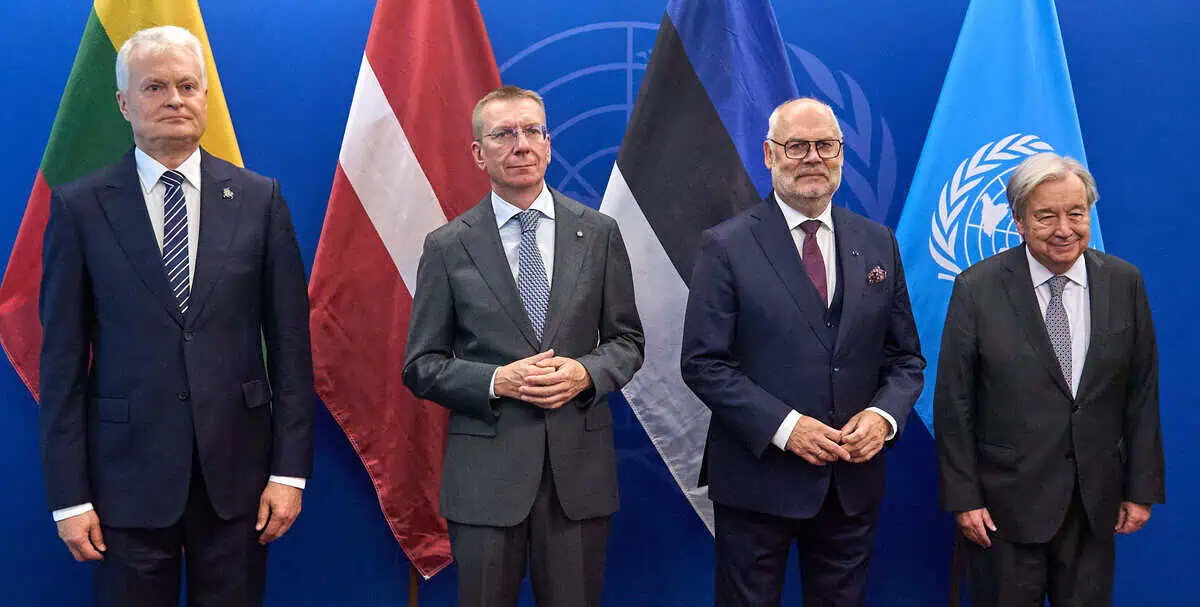
Russia’s Threats in the Baltics: A Q&A With Latvian President Rinkevics
In May, Russia accused Latvia of aiding Ukraine strikes at targets deep inside Russian territory, and even threatened the Baltic state with military retaliation. Latvia called those accusations baseless, but since then the country has been at the center of security debates about where and how Russia might move to target NATO territory.
At this year’s UN General Assembly, Latvian President Edgars Rinkevics is trying to draw attention to the risks for the Baltic region, which consists of his country, Lithuania and Estonia. On Tuesday, Sept. 22, we caught up with him on the sidelines to ask about his strategy for the high-level week and the dangers of both overreacting and underreacting to the moment.
PassBlue: What is the most pressing issue on Latvia’s agenda at this year’s UNGA?
Rinkevics: The pressing issues are Ukraine and the Russian aggression against the country, and the situation in the Mideast.
PassBlue: EU leaders are on heightened alert after recent reports suggesting a possible Russian drone incursion into NATO territory. How are such concerns shaping Latvia and the Baltic states’ objectives at this UNGA?
Rinkevics: Let’s make it clear: We do not expect any direct military incursion into the Baltic states or NATO territory – at least for now. We do see cyberattacks and acts of sabotage, which we call “hybrid warfare.” I will use my address tomorrow [Sept. 23] to highlight this type of threat.
PassBlue: We have seen drones entering Lithuanian airspace as recently as last week. When will such hybrid attacks trigger an enactment of NATO’s Article 5?
Rinkevics: With NATO we have agreed that hybrid warfare may actually lead to an invocation of Article 5. But we are deliberately not making any kind of comments about that.
PassBlue: You have argued that Europe should not panic, but that Russia’s military capabilities should also not be underestimated. How do you reconcile these two messages?
Rinkevics: We must keep a balance. Russia is producing a new, advanced generation of drones and ballistic missiles. The same goes for Ukraine. At the same time, let’s not exaggerate because Russia currently does not have the capability to attack others – though that might change. The cyberattacks and acts of sabotage must be addressed by improving cooperation between [counter]intelligence services within NATO and the EU. You want to tell things as they are, while not fostering panic.
People tend to compare Ukraine and the Baltic states. But back in 2021, there was very clear intelligence about Russia preparing a military invasion. Also, we are a part of NATO, whose troops in Latvia have increased. There are plenty of differences. — Sarah Bronkhorst
Brazil, Canada, Kenya and the EU Debut a Multilateral Partnership
The Partnership for Multilateralism, a new initiative created by Brazil, Canada, the European Union and Kenya, held its first summit at the UN on Monday, Sept. 21. The P4M initiative, announced in an op-ed in the Financial Times this week, aims to deepen international cooperation on such challenges as climate change, AI governance and sustainable development while reaffirming commitments to international law and the UN.
“We share a common purpose to help hold international law, strengthen multilateral cooperation, and deliver peace and prosperity for our people because there can be no lasting peace without prosperity, and no lasting prosperity without peace,” the European Council President António Costa said in his remarks following the summit.
The plan’s support for the UN comes as it is facing numerous acute crises, including significant funding cuts (mostly by the United States), rising gridlock in the Security Council and continuing war in Gaza, Ukraine, Sudan and Iran.
“International law, including the United Nations Charter, is being repeatedly violated, including by permanent members of the United Nations Security Council,” Costa said. “The multilateral system is under stress.”
The countries attending the summit, held during the UN General Assembly’s annual high-level week gathering of world leaders, acknowledged in a joint declaration that their vision for a renewed multilateralism requires reform of the UN. This reform, however, is up for debate. While the declaration endorsed the UN80 internal initiative, it avoided mentioning broader structural reforms that many developing nations have been demanding.
In their remarks at the summit, Kenya, Barbados and Brazil all urged reform of the Security Council, for example, with Kenyan President William Ruto emphasizing longstanding calls for Africa to be included as a permanent member of the UN’s most vital entity.
“A continent of 54 countries and more than 1.4 billion people cannot remain at the margins of decisions central to global peace and security,” Ruto said. “This is not simply about fairness. It is about legitimacy.”
Asked at a press conference after the summit whether the P4M initiative could succeed in the current framework of the UN, Costa said, “Only collectively can we address the challenges that we are living in today.” — Sid Srivatsan


Stephen Schlesinger is the author of three books, including “Act of Creation: The Founding of The United Nations,” which won the 2004 Harry S. Truman Book Award. He is a senior fellow at the Century Foundation in New York City and the former director of the World Policy Institute at the New School (1997-2006) and former publisher of the quarterly magazine, The World Policy Journal. In the 1970s, he edited and published The New Democrat Magazine; was a speechwriter for the Democratic presidential candidate George McGovern; and later was the weekly columnist for The Boston Globe’s “The L’t’ry Life.” He wrote, with Stephen Kinzer, “Bitter Fruit,” a book about the 1954 CIA coup in Guatemala.
Thereafter, he spent four years as a staff writer at Time Magazine. For 12 years, he served as New York State Governor Mario Cuomo’s speechwriter and foreign policy adviser. In the mid 1990s, Schlesinger worked at the United Nations at Habitat, the agency dealing with cities.
Schlesinger received his B.A. from Harvard University, a certificate of study from Cambridge University and a J.D. from Harvard Law School. He lives in New York City.







During Trump’s speech at the UNGA81, he also failed to speak on those pesky womenfolk issues–the ones that have been ongoing since the ‘dawn of time’–and have negatively affected half the global population. Women (of all races) do not have equality in any sector–economic, political, and social, and women are actually losing rights in the U.S., and in other countries. The (smaller) woman continues to suffer high rape and domestic violence rates on every continent–with no end in sight. And was the racial apartheid in South Africa worse than today’s gender apartheid in Afghanistan? Will an increase in female leadership improve the condition of the world? We should try it.